Chesters
Roman name: Cilurnum- Managed by
- English Heritage
- Nearest stage
- End of Stage 2 / Chollerford
- Getting there
- 122 bus, Hexham–Haltwhistle route
- Built
- c. AD 124
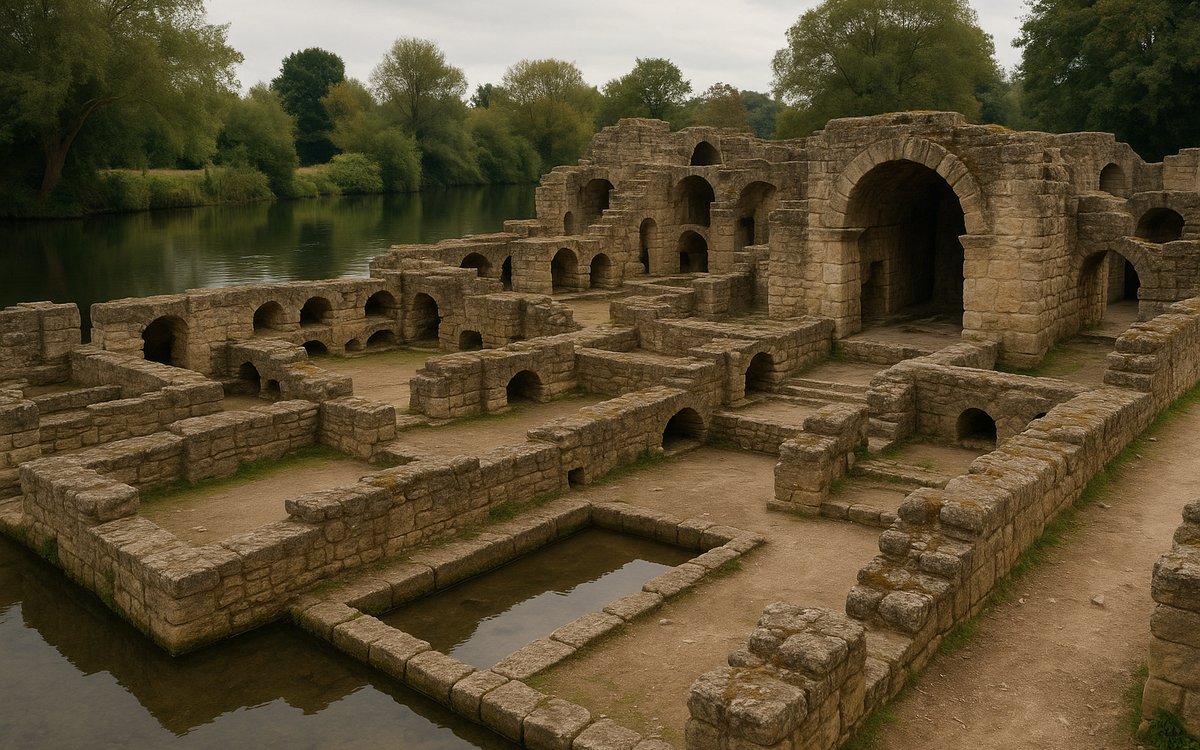
01 The cavalry fort
Chesters (Cilurnum) is Britain's best-preserved Roman cavalry fort, garrisoning roughly 500 cavalrymen from around AD 124 until the Roman withdrawal from Britain in the 5th century. Between the fort and the River North Tyne stands the finest surviving military bathhouse in Britain, first excavated in 1897 and still standing to above head height in places — enough to clearly show the hot, cold, and steam rooms and a changing-room-cum-clubhouse much as Roman soldiers would have used them.
02 Visiting
Chesters sits beside Chollerford, the end point of the trail's Stage 2, and is a stop on the 122 (formerly AD122) Hadrian's Wall Country bus route running between Hexham and Haltwhistle.
03 The Asturians
From around AD 178–84 until the end of Roman Britain, Chesters was held by the Second Cohort of Asturians, cavalry originally raised in what's now north-west Spain. Their arrival prompted a full rebuild of the fort's cavalry barracks — the layout visible today reflects that Asturian-era reconstruction, not the fort's original 2nd-century form.
04 The Clayton Museum
The on-site Clayton Museum is named for John Clayton, the Victorian landowner and antiquarian who bought up large stretches of the wall's central section specifically to stop local farmers quarrying it for stone, and personally excavated much of what's visible at Chesters and beyond today — arguably the single reason this much of the central wall survives at all.